
China vs Hong Kong for Expats: What's Changed, What's a Myth, and Where You Should Actually Live
I Made a Decision
In August, I'm moving back to China.
Not Hong Kong. Mainland China.
And when I tell people that — teachers, expats, people who've spent serious time in Asia — I get one of two reactions. Either "are you serious?" Or "yeah, I get it."
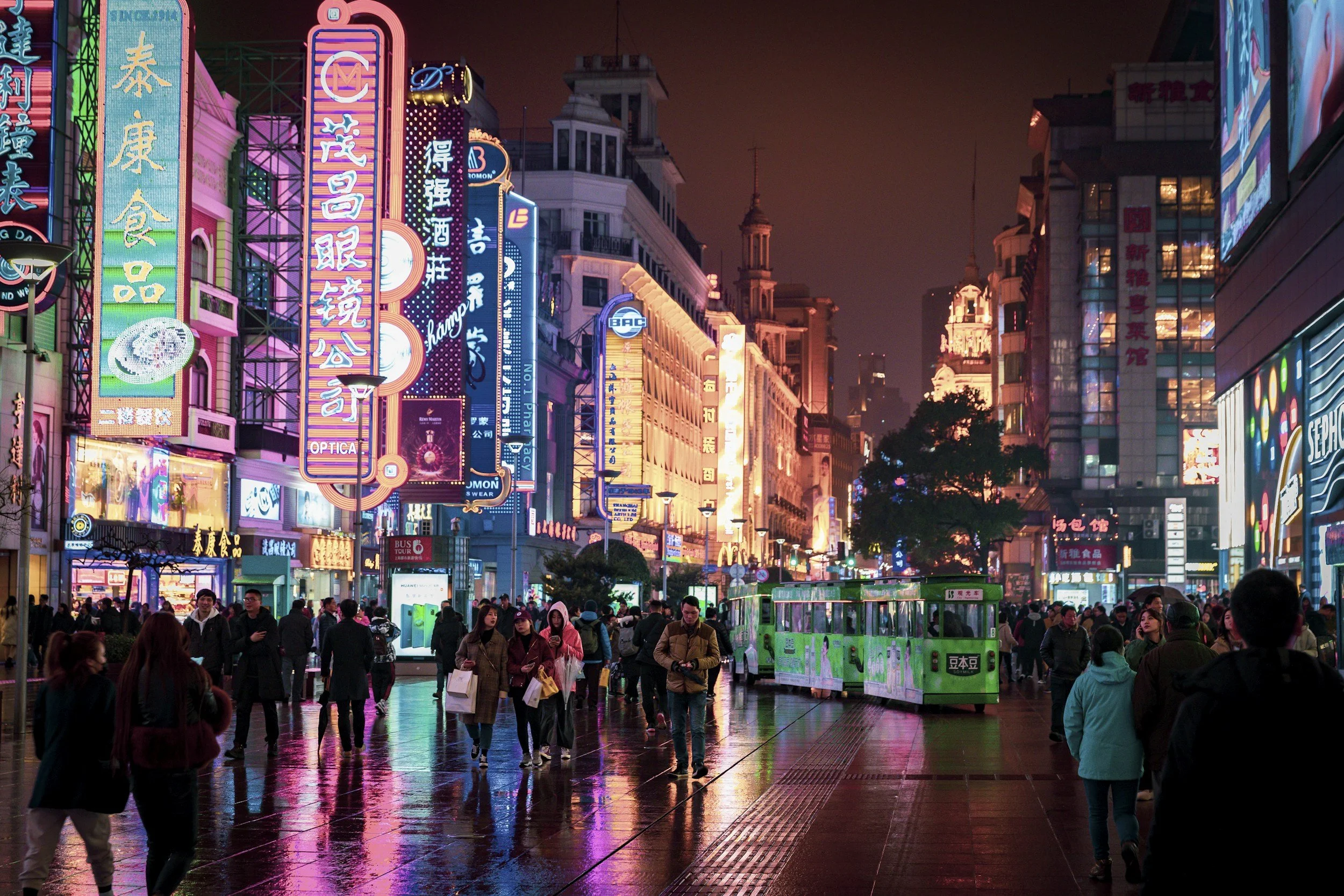
Almost no middle ground.
That reaction alone tells you everything about how polarising this conversation is — and how much noise is out there drowning out honest discussion about what it actually means to live and teach in both of these places.
So here's my background, so you know exactly where I'm coming from.
I first moved to China in 2008. Three years. Then Hong Kong — eight years across two stints, 2011 to 2015, and again 2018 to 2022. I've also lived in Singapore, the Philippines, and for the last four years, Thailand. Twenty-four years. Five countries. All in Asia, all as an international teacher.
This is not a political article. I'm not here to relitigate 2019 or debate party systems. There's no shortage of content doing that. What I couldn't find — when I was trying to make this decision myself — was an honest, lived comparison from someone who has actually paid rent, built a life, and had to choose between these two places. That's what this is.
Five Things That Actually Matter to Expats
1. Cost of living
Most people assume Hong Kong is expensive and China is cheap. Twenty years ago, that was broadly true. It isn't anymore.
A decent one-bedroom apartment in a liveable Hong Kong neighbourhood — not the Peak, somewhere normal — runs north of HK$15,000 a month. Roughly US$2,000. For one room. In a tier-one Chinese city like Shanghai or Shenzhen, you can find something comparable for thirty to fifty percent less. In a tier-two city, potentially half that.
But here's the nuance nobody mentions: Hong Kong's historical cost advantage was that everything else was cheaper too — food, transport, daily life. That gap has nearly closed. A decent meal out in Shanghai is not dramatically cheaper than one in Wan Chai anymore.
The myth is that China is cheap. The reality is that China is better value. There's a meaningful difference. And for teachers on local salary packages especially, that difference shapes your entire quality of life.

Hong Kong
2. Freedom and daily life
This is the one that generates the most heat online — and the most dishonest takes.
When people talk about freedom in Hong Kong versus China, they typically mean political freedom. That conversation is real and has changed, particularly in Hong Kong since 2019. But teachers don't live in political abstractions. They live in apartments, staffrooms, restaurants and streets.
In terms of daily lived freedom — where you can go, what you can do, how you're treated as a foreigner on the street — modern China consistently surprised me. WeChat Pay and Alipay mean you barely need cash or a card. The infrastructure in major cities is genuinely world-class. The sense of momentum, of things being built and growing, is palpable in a way that Hong Kong, for me, no longer is.
There are real trade-offs. VPN dependency is a daily friction point. Certain apps are blocked. If your workflow depends on Google, that requires adjustment. I'm not glossing over any of that.
But "no freedom in China" is a caricature. Walk around Chengdu or Shenzhen on a Saturday night and say that with a straight face.
3. Social life and community
Hong Kong wins this one — and I say that as someone actively choosing China.
The expat community in Hong Kong is one of the best in the world. It's international in a way very few cities can match. If you want an instant social life as a foreign teacher, Hong Kong delivers it faster than almost anywhere I've been.
China is different. The expat community is smaller, more scattered, sometimes more transient. Language matters more — without at least conversational Mandarin, your social world will be more limited at first.
But the friendships I made in China — with locals, with the smaller expat community — felt deeper. Less transactional. Hong Kong's scene is brilliant, but it can be relentlessly surface-level. Everyone's networking. Everyone's in transit.
In China, I felt more settled. More like I actually lived there rather than passed through.
4. Career and business opportunities for teachers
Ten years ago, this wasn't a debate. Hong Kong was the gateway to China — the place you went if you wanted to build a career in Asian education or business. That logic has almost completely inverted.
Hong Kong still matters for finance — for certain kinds of finance. But for everything else, including the international school sector, the growth is inland. The number of international schools across China's tier-one and tier-two cities has expanded significantly, and with it, the range of roles, the quality of schools, and the competitiveness of packages.
China's domestic economy is vast in a way that's hard to appreciate until you're inside it. The ambition, the pace, the investment in education — it's real. If you're a teacher who wants to be somewhere things are being built, the honest answer in 2025 is that China offers more of that than Hong Kong currently does.
5. Safety and comfort
I'll keep this brief because the answer is straightforward: both are exceptionally safe. By any global measure — violent crime, personal safety, walking around at night — Hong Kong and China's major cities are among the safest urban environments on the planet. If you're worried about personal safety in either place, stop worrying.
Comfort is more nuanced. Hong Kong's infrastructure is immediately familiar to Western teachers — English is everywhere, the systems work in recognisable ways, the international food scene is extraordinary.
China has closed that gap dramatically in the last decade. But it hasn't closed it entirely. If you need English signage, English menus and English-speaking doctors to feel settled — Hong Kong is the easier landing.
If you're willing to lean in and figure things out — China rewards that effort in ways that are genuinely hard to explain until you've experienced it.
Five Myths That Need Busting
Myth 1: "There's no freedom in China"
Here's what's true: China has a one-party political system. Certain websites are blocked. Certain conversations you navigate more carefully than you would elsewhere.
Here's what's also true, and what Western media almost never says: as a foreign teacher going about your daily life in a Chinese city, you will feel remarkably free. Free to travel the country. Free to eat, socialise, explore, build a life — without interference.
The freedom China restricts is primarily political. The freedom it offers — personal, lifestyle, daily — is abundant. Conflating the two is the mistake that stops a lot of good teachers from seriously considering a country that might suit them very well.
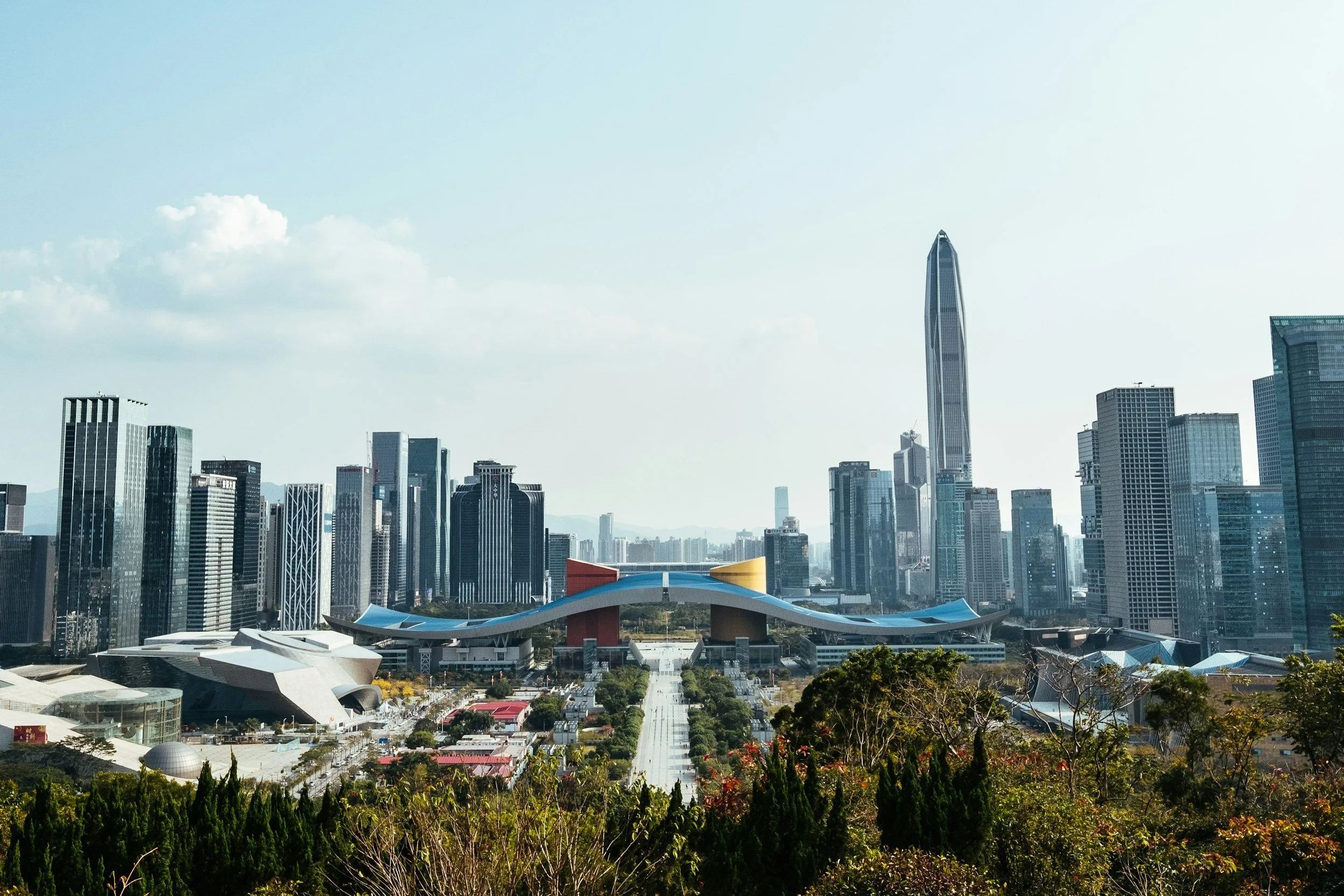
Shenzhen
Myth 2: "Hong Kong is still a world city"
I want to be careful here. Eight years of my life are in Hong Kong. Real friendships. Real memories. I have genuine affection for the place.
But the Hong Kong I returned to in 2018 was not the Hong Kong I'd left in 2015. And the Hong Kong that emerged from 2019 and then from COVID is different again. Many long-term Western expats left. Some of the creative energy, the sense that anything could happen — it's quieter.
The financial infrastructure is still world-class. The physical city is still stunning. But "world city" implies a particular kind of openness and dynamism. In 2025, Hong Kong feels more like a very well-run regional hub than the beating heart of Asian commerce it was in 2012.
That's not a political statement. It's just what I observed, on the ground, over two stints.
Myth 3: "Mainland China is cheap, Hong Kong is expensive"
This was true in 2010. It isn't the whole picture in 2025.
Shanghai restaurant prices are closing in on Hong Kong. International schooling in Beijing is eye-wateringly expensive. Tier-one city rents have risen significantly. On the Hong Kong side, many expat packages remain competitive precisely because the city has built an infrastructure around making expatriate life financially viable.
For teachers on local salaries — an increasingly common arrangement — China's value proposition is genuinely strong. For teachers on package deals, the gap is narrower than most people assume.
Myth 4: "You can't get by without speaking Chinese"
In Hong Kong: you can live a full and complete life speaking nothing but English. Full stop.
In China: it depends where you are and what you want. In Shanghai or Shenzhen, in an international school environment, you can function reasonably well in English. Translation technology has improved enormously. WeChat handles a lot.
But the honest truth is: if you move to China without making any effort to learn Mandarin, you will eventually hit a ceiling. The good news is that even basic survival-level Mandarin — taxis, restaurants, markets — transforms the experience. Locals notice the effort and respond to it warmly.
The myth isn't that language doesn't matter. It's that the barrier is insurmountable. It isn't.
Myth 5: "Hong Kong is safer and more comfortable for expat teachers"
Safety: both are among the safest places you'll ever live. This myth doesn't survive contact with reality.
Comfort: this one is more interesting. There's a version of comfort that is really just familiarity — English menus, systems that work the way you expect, bars that feel like home. Hong Kong offers that abundantly, and for teachers in their first or second overseas posting, that familiarity has genuine value.
But there's another kind of comfort. The comfort of feeling like you're somewhere alive, somewhere growing, somewhere that asks something of you and gives back more than you expected.
For teachers who've been in Asia long enough to have outgrown the familiarity kind of comfort, China becomes not just manageable — but actively exciting.
Who Should Choose Which
This is the part of the conversation that usually gets skipped. So let me be direct.
Choose Hong Kong if:
This is your first or second posting in Asia. The infrastructure for expat life is extraordinary and the networks are genuinely international.
Finance is your partner's world, or yours. Hong Kong's financial sector ecosystem remains without equal in Asia.
You have a family and need certainty quickly — excellent international schools, navigable healthcare, immediate safety.
You need to travel constantly. Hong Kong's airport and connections are outstanding.
You're someone who thrives on urban intensity — the density, the pace, the verticality of the place.
Choose China if:
You've been in Asia long enough to be bored of the familiar and want something that demands more of you.
Mandarin is part of your professional plan. There's no substitute for full immersion.
You want to be in a growing international school market with expanding opportunities across multiple cities and tiers.
You measure quality of life by experience density rather than comfort level.
You want to build something — a career, a presence, a long-term life — rather than be based somewhere while you do something else.
Why I'm Choosing China — The Honest Version
I've been sitting with this decision for a while, and I want to give you the real answer rather than the tidy one.
Hong Kong gave me some of the best years of my life. I mean that completely sincerely. The energy of that city in 2011 — I've never quite experienced anything like it. It felt like the centre of the world.
When I went back in 2018, I found pieces of that. But something had shifted. It felt like a city figuring out what it was going to be next, and not quite having found the answer. I left in 2022 and went to Thailand — the right call at the time. Four good years. But Thailand always felt like somewhere I was living in rather than living for.
China is different. It's the only place I've lived where I consistently felt slightly behind the pace of what was happening around me. And I mean that as a compliment. The pace of change, the scale of ambition, the way technology gets woven into daily life faster than anywhere else — it kept me engaged in a way I find hard to replicate.
I'm not moving back because China is perfect. It isn't. The VPN friction is real. The bureaucracy can test your patience. There are conversations you navigate with more awareness. I know all of that. I'm going in with my eyes open.
But after twenty-four years across five countries, I've never found a perfect place. What I've found are places that are right for who I am at a particular moment. And right now, China is that place.
Your answer might be completely different. And that's exactly the point.
A Final Honest Note
Both of these places have changed significantly in the last five years. Anyone whose take on Hong Kong or China is based entirely on experience that predates 2020 — including, to some extent, me — deserves some scepticism. I am going back to a China I haven't lived in since 2011. It will be different. Some of it will be better than I expect. Some of it will be harder.
The only way to actually know which place is right for you is to spend real time in both. Not a week. Not a holiday. Real time, with the mindset of someone trying to understand a place rather than visit it.
Everything here is a starting point. Your own experience is the only thing that actually counts
Categories: Living Overseas | International Teaching Tags: China, Hong Kong, expat life, international teaching, teaching in China, teaching in Hong Kong, Asia, expat comparison, quality of life
